When I should be memorizing the clinical practice recommendations on bladder
cancer, I find myself starting a new book. I make it sound as if this is not my
fault (it is), that I’ve been forced into it somehow (it's completely voluntary). Months away from my diplomate
exam, it is almost illegal to insert other leisurely reading materials other
than DeVita and the NCCN guidelines. But I cannot resist not reading anything by
John Calvin, one of my all-time favorite writers and thinkers, a hero of the
Christian faith. I adore him to such an extent that I went to Geneva largely to
visit the Reformation Museum and to see his handwriting for myself. It was my
version of being a fan. (The main purpose of the trip was to accompany my good
friend, Harold, when we presented our paper on pancreatic cancer. But the
Reformation Museum was my ulterior motive.) I have long since overcome the need
to keep abreast with the latest trends in pop culture. I simply cannot keep up.
In exchange, I have, to my pleasure, discovered that reading ancient texts can
be a breath of fresh air, a relaxing communion for my mind and soul.
The book I’m talking about is Volume 1 of Letters of John
Calvin, compiled and translated from the Latin and French by Dr. Jules Bonnet.
Reading published correspondence is the scholarly version of stalking. Whereas
the Institutes sounds like an elegant and elaborate treatise of Christian
faith—and it is!—the Letters offers a more intimate and personal view of
Calvin. What was he like in person? How did he relate to his friends?
The collection’s preface refers to John Calvin’s
correspondence as a body of work “in which the familiar effusions of friendship
are mingled with the more serious questions of theology, and with the heroic
breathings of faith.”
In his letter of Francis Daniel (dated 23 May 1532, written in Paris), his friend
from Orleans, Calvin gives an update that
his first work, Commentaries of the Books of Seneca, “De Clementia,” has been
printed, but at his own expense.
At present, I am using every
endeavor to collect some of it back. I have stirred up some of the professors of
this city to make use of them in lecturing.
Therefore, rumaraket
din si Calvin.
We also learn that Calvin was seen-zoned. In
his letter to Francis Daniel (1532), he writes:
I have
nothing to write to Duchemin, seeing that often as I have asked he often returns
no answer, nor shall I set out upon my journey until he write. What will it
matter, if for some days I shave in the cold while in search of a lodging for
the body!
May pagka-fierce din siya.
“Concerning Coiffart what can I say, except that he is a selfish fellow?”
My characterization of the great and eminent John Calvin is laced with humor and is perhaps short-sighted. But it is amazing to me that he, like the rest of us, was human, too.
After a year, I finished reading volumes 1-3 of John Calvin's The Institutes of the Christian Religion. I mostly read it in my Kindle during my morning commute to work, a ritual that affords me the chance to read works of literature outside of my standard readings in oncology. The Institutes now belongs to my list of favorite books of all time, along with Augustine's Confessions (which was often quoted by Calvin). Calvin's main thesis is justification by faith alone through Christ alone. It is the "alone"--the exclusivity of faith, the rejection of good works (or good works with faith), as a means to salvation--that creates the major doctrinal difference between Calvin's faith and Roman Catholicism. It is so big a difference that Protestantism came into being, a movement that was ushered in by a renewed meditation of what Scriptures had originally meant, a deeper understanding of the love and mercy of God through Jesus Christ, a humbling realization of the uselessness of good works, the depravity of man, and the holiness of God.
John Calvin, this (based on biographies) 27-year old, introverted, serious academic, so consumed with the love for God's Word, wrote thus:
For it states this to be the order of justification; that from the beginning God deigns to embrace sinful man with his pure and gratuitous goodness, contemplating nothing in him to excite mercy, but his misery; (for God beholds him utterly destitute of all good works;), deriving from himself the motive for blessing him, that he may affect the sinner himself with a sense of his supreme goodness, who losing all confidence in his good works, rests the whole of his salvation on the Divine mercy. This is the statement of faith, by which the sinner comes to the enjoyment of his salvation, when he knows from the doctrine of salvation that he is reconciled to God; that having obtained remission of sins, he is justified by the intervention of the righteousness of Christ; and though regenerated by the Spirit of God, he thinks on everlasting righteousness reserved for him, not in the good works to which he devotes himself, but solely in the righteousness of Christ.
That I am saved solely because of Christ, and not because of any good I have done, is the all-encompassing truth on which my life revolves.
This has been a good year for reading. I wish I had read more books, but in between chemotherapy, academic reading (which I don't count as reading, in the way that I define it here, i.e., reading for pleasure), I could only squeeze in a few. Which is not to say, of course, that reading DeVita isn't pleasurable—it can be. Nevertheless, here are my most memorable reads for 2018.
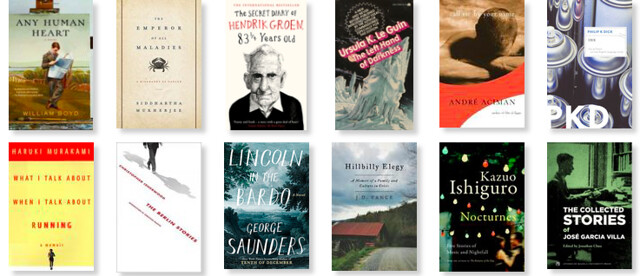
[Before I launch into my list, I asked some friends and family to list their favorite reads, so I can convince non-readers to try out the habit. You can read Kuya John's top seven, Manong Ralph's top ten, and Ate Liw's many recommendations, including those that had lasting effects on her. In a sense, you are what you read. Surely, you don't want to be defined by the fact that you only read pep.ph—that, too, is mildly entertaining, but there are greater joys to be had.]
1. Institutes of the Christian Religion by Jean Calvin
After a year, I finished reading volumes 1-3 of John Calvin's The Institutes of the Christian Religion. I mostly read it in my Kindle during my morning commute to work, a ritual that affords me the chance to read works of literature outside of my standard readings in oncology. The Institutes now belongs to my list of favorite books of all time, along with Augustine's Confessions (which was often quoted by Calvin). Calvin's main thesis is justification by faith alone through Christ alone. It is the "alone"—the exclusivity of faith, the rejection of good works (or good works with faith), as a means to salvation—that creates the major doctrinal difference between Calvin's faith and Roman Catholicism. More here.
2. Scalia Speaks by Antonin Scalia
This book is a collection of speeches of the late US Supreme Court Associate Justice Antonin Scalia known for his conservative interpretation of the US Constitution ("originalist") and his colorful and passionate opinions. At some point his book made me tear up when Nino—as his best friend, Justice Ruth Bader Ginsberg, called him—wrote about his father and his childhood. His tributes to his friends were also moving. I wish there were more like him in government. He once said, "“If I have brought any message today, it is this: Have the courage to have your wisdom regarded as stupidity . . . Be fools for Christ. And have the courage to suffer the contempt of the sophisticated world.” More here.
Watch this memorable interview.
3. The Emperor of All Maladies: A Biography of Cancer by Siddharta Mukherjee
I wrote, "It is a narrative that illustrates the value of the scientific process, and how basic sciences—molecular biology, chemistry, and physics—form the backbone of medicine's understanding of this disease. The book excels in outlining the doubts and worries of the scientific community, a reminder that uncertainties lead to scientific questions; and with the questions come the answers—not as an inevitability but as a possibility. In a situation where death is impending, any possibility spells the hope of relief, if not an actual cure." What an exciting time to be in the field of Oncology! More here.
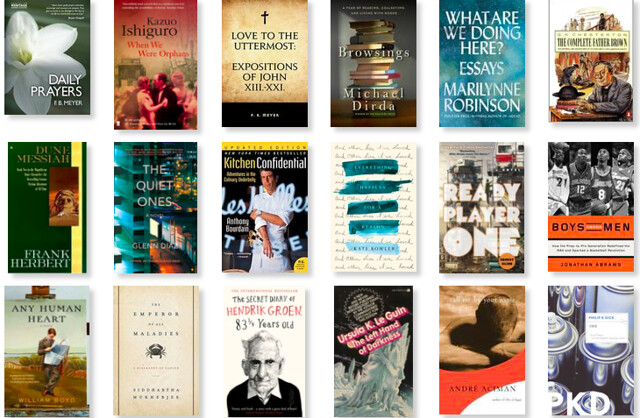
4.5. Love to the Uttermost by F.B. Meyer
I quoted F.B. Meyer many times this year. This work is an exposition of the Gospel of John, highlighting the love of Jesus, a love that is to the "uttermost." I'll go back to this masterpiece of Christian literature to cheer and encourage my soul. If you find printed copies of any of his books, kindly alert me.
4.5. Browsings: A Year of Reading, Collecting, and Living With Books by Michael Dirda
These are reflections of Washington Post book critic and Pulitzer prize winner Michael Dirda about the joys of reading. These came out initially as weekly essays he wrote for The American Scholar. He is neither snobbish nor proud, but he exudes the childlike charm of a bookworm, and he loves reading so much that he wants to convince every person to get into the habit. Towards the end of this work, he quotes Franz Kafka, "The books we need are the kind that act upon us like a misfortune, that make us suffer like the death of someone we love more than ourselves, that make us feel as though we were on the verge of suicide, or lost in a forest remote from all human habitation—a book should serve as the ax for the frozen sea within us." Thanks to him, I got into a book-buying frenzy this December, having purchased Elena Ferrante's four Neapolitan books in one go because, according to him, to own a book is to own it physically. This was—and still is—a joy to read and reread. I imagine myself going back to Browsings to check his recommendations for what kind of fiction to read on holidays, what science fiction to enjoy, and so on.
5. Lincoln in the Bardo by George Saunders
President Lincoln and his dead child, in a gripping, heart-wrenching story about longing, death, and separation. What a delight—like reading an obituary in the backdrop of Dante's Inferno.
6. Dune Messiah by Frank Herbert
"Paul Artreides's sister Alia is now grown up, a sarcastic, powerful, intuitive Reverend Mother, trained in the ways of the Bene Gesserit. Paul is now called the Muad'dib, the Emperor of the known worlds in the galaxy, and he has to confront opposition, intrigue, and mystery that comes with his powers." More here.
7. The Quiet Ones by Glenn Diaz
"What with all technical papers I need to write and the oncology journals I need to read, I can't get my eyes off Glenn Diaz's The Quiet Ones (Ateneo Press), winner of the 2017 Palanca Grand Prize. It is a masterful work of someone who breathes the English language in Filipino atmospheric conditions. The book is about a call center agent who gets involved in a scam and who scrambles out of Manila to escape the authorities. The details that intersperse the story make the novel riveting: such as this scene at the PGH Cancer Institute. Alvin's mother had pancreatic cancer." More here.
8. The Left Hand of Darkness by Ursula K. Le Guin
This book challenges the notion of love and sexuality, the way only science fiction can question our reality. A representative of the Ekumen goes to the Gethen, in the hopes of convincing the leaders of the planet to join the confederation of celestial powers. The Gethenians are ambisexual—they change sexes after a period of time. Ms. Le Guin was a writer ahead of her time. She passed away this year. More here.
9. The Secret Diary of Hendrik Groen, 83 ¼ Years Old by Hendrik Groen
The old fascinate me. Mr. Groen is an 80-something man who lives in a nursing home in the Netherlands. A sensible, decent man, he likes to keep to himself, his diabetic friend who would lose his toes due to neuroischemic foot ulcers, and his geriatric gang that goes out once a month. He also falls in love. Asians would probably not get the point of putting their parents in these institutions, for we would rather take care of our old ourselves, in our own homes, but this book nevertheless adds to my understanding of the unique challenges posed by aging.
10. Four Princes: Henry VIII, Francis I, Charles V, Suleiman the Magnificent and the Obsessions that Forged Modern Europe by John Julius Norwich
There's so much that history can teach us, only if we allow it to. In this gripping work by John Julius Norwhich, he draws themes from history's most powerful men in Europe.
Other books I read
When We Were Orphans by Kazuo Ishiguro
An English detective, who lost his parents in Shanghai, finds the truth about his parents. The book reminded me of the old streets of Hong Kong, for some reason.
Where Europe Begins with Yoko Tawada
I didn't enjoy this as much, unfortunately. The stories seemed weird to me.
Codename Villanelle by Luke Jennings
Have you seen the BBC series, Killing Eve? It's about an awkward detective who looks into the murders committed by a trained, brilliant, beautiful sociopath. A short read but was just as thrilling as the series starring Sandra Oh. The series was painfully short. No season two yet?
The Berlin Stories: The Last of Mr. Norris & Goodbye to Berlin by Christopher Isherwood
These reminded me of long train rides in Europe, and the many conversations I overheard there.
Boys Among Men by Jonathan Abrams
I belong to a cell group in church called Pilgrims, which is comprised of basketball-loving and -playing men, with whom I share a love for Christ and the Bible. I wasn't gifted in the sports department, so what would be the best alternative way of learning about basketball? In this book, Mr. Abrams, explores the lives of players who transitioned from high school straight to the PBA, bypassing collegiate tournaments. NBA is brimming with intrigue and malice, apparently, and all of that happens during the drafts. The young are vulnerable, and they need the support of family and friends.
Everything Happens for a Reason by Kate Bowler
"The book attempts at being coherent; it is divided in nine chapters with a preface that begins with, 'There's a branch of Christianity that promises a cure for tragedy. It is called by many names, but most often it is nicknamed 'prosperity gospel' for its bold central claim that God will give you your heart's desires: money in the bank, a healthy body, a thriving family, and boundless happiness.' But cancer is hardly coherent." More here.
Theft by Finding by David Sedaris
Mr. Sedaris is among the funniest people alive. The books comes straight out of his diaries. The entries are absurdist. In reading this, I reminded myself to become more observant. Each day, each person is unique and could end up in my own journal.
Hillbilly Elegy: A Memoir of a Family and Culture in Crisis by J.D. Vance
The first book that made me realize that poverty creates a culture among those living in it that they can only go as far in life as their predecessors—until someone tells them otherwise. This is a biography of the lawyer, J.D. Vance, who is proud of his Appalachian, hillbilly heritage.
Ubik by Philip K. Dick
A group of inertials—men and women who have the special ability to negate powers of precogs and telepaths—is killed by a blast. The survivors go through a time warp and are subjected to rapid deterioration themselves. The panacea is a special spray called Ubik.
Ready Player One by Ernest Cline
By now, this must sound cliché, but the book is way better than the movie.
Any Human Heart by William Boyd
The journals of the fictional Logan Mounstuart, who comes from a privileged English background.
What I Talk About When I Talk About Running by Haruki Murakami
Mr. Murakami runs to fuel his writing. No wonder why he looks so trim!
Currently reading
What Are We Doing Here? By Marilynne Robinson
The Complete Father Brown by GK Chesterton
Too Much Happiness by Alice Munro
The Doctrine of Regeneration by Stephen Charnock
Never finished
Call Me By Your Name by André Aciman
At some point I could not take the language, as it bordered on the lascivious.
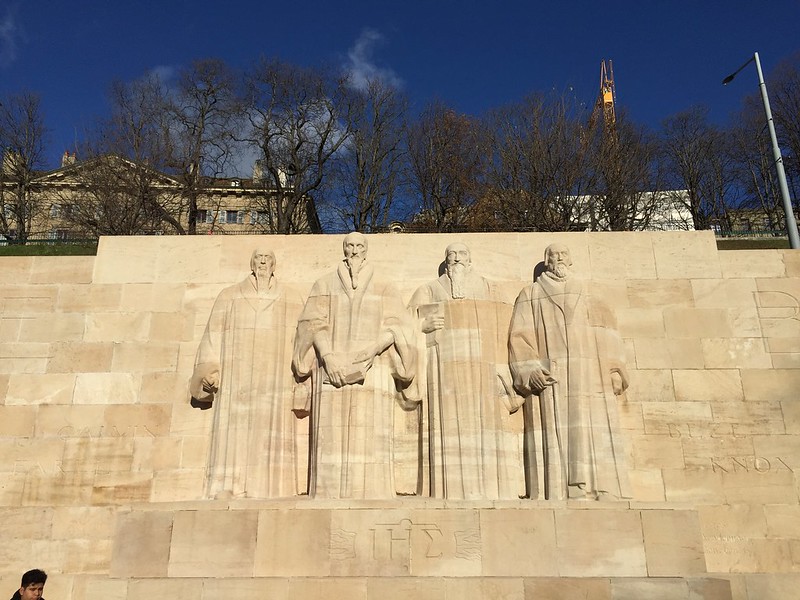
I dragged my friend and colleague, Harold, to visit the Reformation Museum in Geneva last December. This was after the poster presentation at a major immune-oncology conference, which we had the privilege of attending. On our way to the museum, we dropped by the Reformation Wall where John Calvin's monument was in the middle. John Calvin holds a very special place in my spiritual growth. The Institutes of the Christian Religion is one of my favorite books of all time; it is in the same place as St. Augustine's Confessions.
I was surprised to read Calvin's commentary on Ephesians. The internet is an endless source of fascination. Here he writes about Ephesians 1:3a, "Blessed by the God and Father of our Lord Jesus Christ."
The lofty terms in which he extolls the grace of God toward the Ephesians, are intended to rouse their hearts to gratitude, to set them all on flame, to fill them even to overflowing with this thought. They who perceive in themselves discoveries of the Divine goodness, so full and absolutely perfect, and who make them the subject of earnest meditation, will never embrace new doctrines, by which the very grace which they feel so powerfully in themselves is thrown into the shade. The design of the apostle, therefore, in asserting the riches of divine grace toward the Ephesians, was to protect them against having their faith shaken by the false apostles, as if their calling were doubtful, or salvation were to be sought in some other way. He shews, at the same time, that the full certainty of future happiness rests on the revelation of his love to us in Christ, which God makes in the gospel. But to confirm the matter more fully, he rises to the first cause, to the fountain, -- the eternal election of God, by which, ere we are born, (Romans 9:11,) we are adopted as sons. This makes it evident that their salvation was accomplished, not by any accidental or unlooked-for occurrence, but by the eternal and unchangeable decree of God.
I'VE BEEN reading John Calvin's Institutes of the Christian Religion. I'm using the translation by John Allen. Addressed to the King of France, the book is considered one of the best books ever written in Christendom.
John Calvin is an intelligent, deeply thoughtful man whose writing reflects his faith and convictions. It's a feast for the soul. I can't believe I'm only starting to actually read classic Christian literature now.
Calvin summarizes his work:
Man, created originally upright, being afterwards ruined, not partially, but totally, finds salvation out of himself, wholly in Christ; to whom being united by the Holy Spirit, freely bestowed, without any regard of future works, he enjoys in him a twofold benefit, the perfect imputation of righteousness, which attends him to the grave, and the commencement of sanctification, which he daily increases, till at length he completes it at the day of regeneration or resurrection of the body, so that in eternal life and the heavenly inheritance his praises are celebrated for such stupendous mercy.
I often get asked how I deal with patients who cry in the clinic. There are no easy answers. But I assume that most of my patients and their families know more than what they'd be given credit for. They might not know the nitty-gritty details of treatment and prognosis, but they carry with them a vague, often accurate, idea that what they have is "not good." When they enter the consultation room, I don't immediately get into the details. I warm them up with questions of where they're from and what they do. I establish a connection. Where I practice, that involves asking if they know a common person. It helps that I speak the vernacular for a more nuanced, intimate back-and-forth. They hardly get surprised when I break the news: that they have cancer. But my speaking to them confirms the fact of their disease. They cry, usually quietly, grappling for a handkerchief or tissue paper. I have a stack of napkins on my desk that I offer to them in a few minutes of silence. I assure them it's okay to let it all out.
There's a common belief that it is detrimental to the body and soul if one keeps the pain inside. Grief must be expressed and let out. I'm sure there are psychological and theological reasons for this. In my experience, encouraging outpourings of grief is cathartic and ultimately beneficial.
This is a bit of a stretch, but this daily reality of my private practice seems to find resonance in Dr. Edward Donnell's The Christian Life, a chapter in the book, "John Calvin: For a New Reformation" (ed. Derek W.H. Thomas and John W. Tweeddale, Crossway, 2019). I love John Calvin. Each time I read him or about him, I learn something new—as a Christian or, in this case, as a cancer specialist. I must note that cheerfulness is not defined here as being happy-go-lucky. It is, in my reading of this text, a deep-rooted joy.
Yet Calvin's humanity and pastoral wisdom shine out when he explains that cheerfulness can coexist with anguish. The point of a cross is that it hurts terrible, and this is is the paradox and glory of Christian suffering. He has no time for what he calls the "iron philosophy" of Stoicism. The Lord himself shed tears over his own trials and over the misfortunes of his disciples . . . As Calvin describes, "If all fear is branded as unbelief, how shall we account for that dread with which, we read, he was heavily stricken [Matt. 26:37; Mark 14:33]? If all sadness displeases us, how will it please us that he confesses his soul 'sorrowful even to death' [Matt. 26:38]?"
Dr. Donnell concludes,
This is sane and wonderfully tender pastoring.
In practice terms, this translates to me saying, "It's okay to cry." I end with a word of encouragement, ask their permission if I can pray for them. As they leave, I take care not to give false promises of cure, but I don't withhold from them sufficient hope to carry them through the days before they see me again on their next consult.
The main difference between napkin and tissue paper is that the napkin is a soft piece of fabric material, used to wipe the face before and after eating. On the other hand, Tissue Paper is a soft easily absorbent paper used for cleaning purposes. Both are available in different colors.
Writing to William Farrel, John Calvin alludes to the death of Augustin Courault, a zealous preacher of the Reformation in Paris and Geneva. From the book's footnote: "Advanced in years, he had become blind. His death, which was at first attributed to poison, caused the deepest regret to both Farel and Calvin."
Distress and wretchedness during the day seems only to prepare a lodging for the more painful and excruciating thoughts of the night. It is not merely the want of sleep, to which custom has so inured me, by which I am harassed, but I am utterly exhausted by these melancholy thoughts all night long, than which I find there is nothing more destructive for my health.
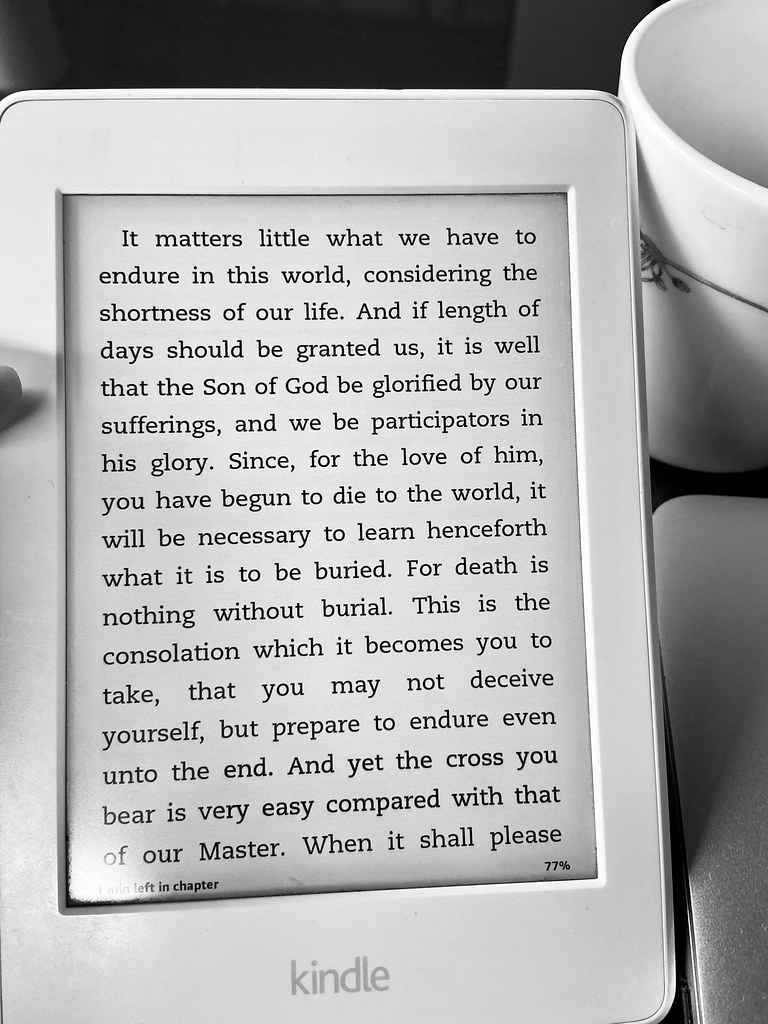
Letter CXXXIII—To Monsieur de Falais. Directions for his conduct towards the Emperor Charles V. Geneva, 31st May 1545. An excerpt:
It matters little what we have to endure in this world, considering the shortness of our life. And if length of days should be granted us, it is well that the Son of God be glorified by our sufferings, and we be participators in his glory. Since, for the love of him, you have begun to die to the world, it will be necessary to learn henceforth what it is to be buried. For death is nothing without burial. This is the consolation which it becomes you to take, that you make not deceive yourself, but prepare to endure even unto the end. And yet the cross you bear is very easy compared with that our of Master. When it shall please him to impose a heavier burden on you, he will give you, at the same time, shoulders to bear it.
John Calvin's letters are a breath of fresh air, balm for the weary soul, and encouragement to the heavy heart.
"Unless this knowledge be clear and certain, the conscience can have no rest, no peace with God, no confidence or security...."—this must be the reason why believers feel unburdened after coming to the cross. If our eternal destiny depended on us, John Calvin writes that we "are in a most miserable and deplorable situation." God, through Jesus' vicarious death and sacrifice, provides security of salvation, grounded on faith in him and not in our good works.
I'm more than halfway through The Institutes by John Calvin; it is a thick book. I read chunks of paragraphs during commutes, and it has added great riches to my spiritual life. It is one of my favorite books of all time.
When our study on pancreatic cancer got accepted in a prestigious immuno-oncology conference in Switzerland, I told Harold—my fellowship colleague and, over the past few months, someone whom I’ve had the honor to call a dear friend—that I might just go with him. My exact words, I think, were, “Gusto ko ng snow snow.”
A part of the reason for my joining was that I wanted to do a side trip to Naples, in the southern part of Italy, where Elena Ferrante’s four novels were set, and to experience Geneva, where John Calvin, one of my favorite writers in Christianity, lived. Never mind that the conference was in December. Winter, I have learned in past brief travels, doesn’t agree with my tropical sensibilities. When exposed to the bitter cold, my skin develops a rash—multiple pruritic erythematous papules that look like pimples, only smaller, in my inner thighs and torso. The snow, I had learned, was only enjoyable for the first fifteen minutes. But the Norwegian saying, “Det finnes ikke dårlig vær, bare dårlig klær!” (There is no bad weather, only bad clothes!), challenged me and, with the advice of well-traveled friends and colleagues, brought enough thermal clothing to keep me from shivering.
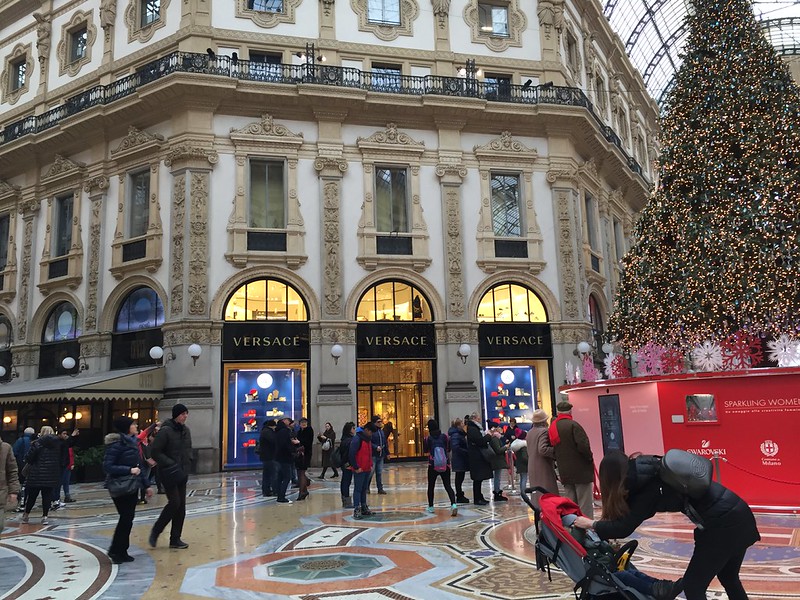
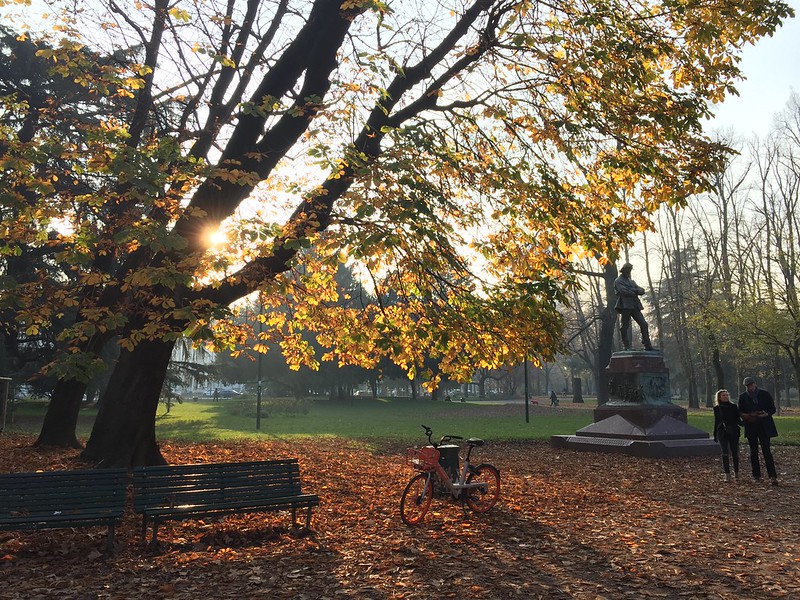
My seven-day itinerary didn’t allow me to visit Naples (it was too far), but at least I had a chance to see Milan, which was three hours away from Geneva. I stayed at a cheap hotel near Statione Milano Centrale, where I was greeted by Filipino staff. “Ate, saan okay puntahan dito?” I asked. I had no checklist, I had only wanted to sit in a café and read, and I was content with doing nothing, killing time before I would meet Harold two days later in Switzerland. The kababayans pointed me to various places, mostly those enumerated by my friends Roger and Luther who sent me their recommendations. I visited parks, canals, museums, and stores. I read Elena Ferrante’s “The Story of the Lost Child” in real time, the fourth of her Neapolitan novels, and had the experience of living the story: these were the chapters where Elena Greco would visit Milan. In a way, seeing the sartorial Milanese, walking along the cobblestoned streets, listening to the sonorous and charming Italian (I would argue that Italians are to Europeans what Ilonggos are to Filipinos), added depth and color to my imagination. You should have realized by now that I am a devoted Elena Ferrante reader, whoever she may be.
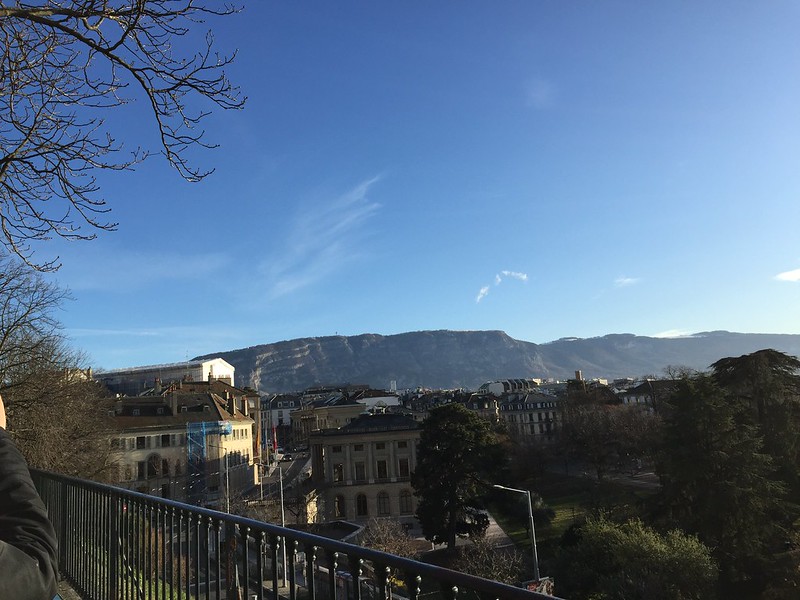
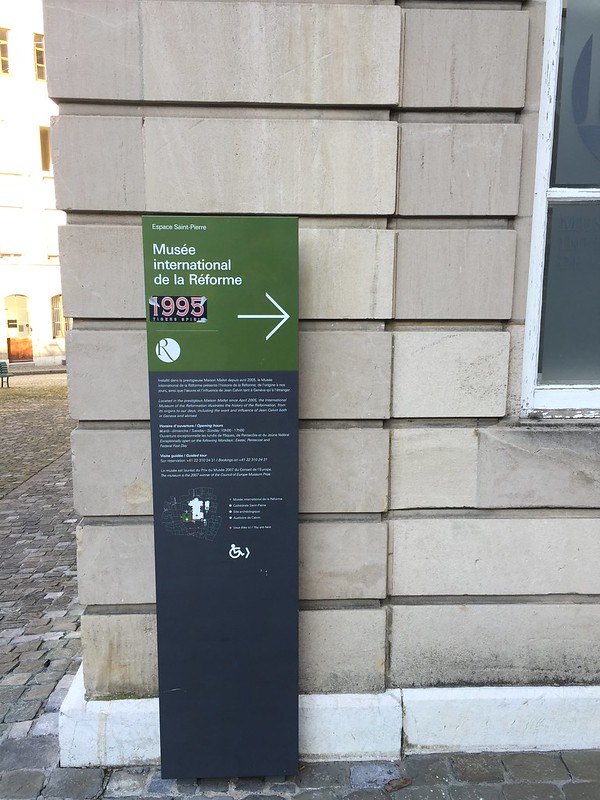
I met Harold in Geneva, where everything cost twice, even the sandwiches. He took over the reins of the tour, having spent a weekend figuring out which trains we should take, which streets we should visit, or if we had enough time to visit the castle and see the Alps. He came armed with Google maps connected to a portable internet, and he booked tickets in advance, hoping to get supersaver discounts on the SBB, which, when we see each other, we still laugh about. (We paid for twice the price; it pays to book the tickets a day before, apparently.) My only request to Harold was a visit to The Reformation Museum. He graciously added that in the walking tour.
Imagine my thrill at seeing John Calvin’s letters in his own handwriting—he must have used a stub nib, with ink that looked like my Diamine Oxblood and Chrome. It was as intimate as I could get to this man who penned my favorite, “The Institutes of the Christian Religion,” where he argued that God is holy and just; that all men (and women) are sinners and are unable to save themselves, and are therefore doomed to hell; that God, in His undeserved mercy and overflowing love, sent His only begotten Son, Jesus Christ, to satisfy His justice and save men from perdition; and that by faith alone, through grace alone, through Christ alone—and not through good works, for no man is truly good—can man be truly saved. These truths of the Bible remain the bedrock of my life. Walking in the halls of the museum, and listening to the free audio guide that came with the eight-franc ticket, made me realize once again that John Calvin dearly loved his Redeemer, who had first loved him and gave His life for him. It was emotional and autobiographical—I had experienced the same spiritual conversion. From darkness to light, from death to life.
* * *
We spent one whole day with the lovely and lively Ma'am Jinky, who took us along with her to Gruyère—but that's for another entry.
Five hundred years ago, on October 31, 1517, it's said that Martin Luther posted his 95 theses in protest against the doctrines and practices of the ruling Roman Catholic Church. This ushered the momentous event in world history known as the Protestant Reformation, a movement that led Christendom back to its roots, to the purest form of God's message of salvation: grace alone through faith alone. This movement changed the world. Along the way, it introduced intellectual and spiritual giants—Martin Luther and John Calvin, among them, who were persecuted for standing up to Rome. The printing press was born as an inevitability and necessity. The renewed understanding of God's sovereign and unmerited grace was due, in part, to the distribution of Bible translations in the people's lingua franca. For the first time ordinary folk, who likely did not understand Latin, could read and understand God's Word for themselves. With their eyes opened, the Gospel freed them from the paralyzing fear and uncertainty of their eternal destinations. By the grace of God, they understood that they need not work for their salvation—it was, and still is, freely offered once they repent of their sins and put their faith in the Lord Jesus Christ. God would breathe new life into their souls, so they could do good works as a consequence, and never as a prerequisite.
The Reformation's battle cry was a return to the purity God's Word, that Scripture alone should be the basis of faith and doctrine was, and that Scripture must interpret itself. Only Christ can save people from their sins, and never themselves. What joy! What freedom!
Letter of John Calvin to Monsieur de Falais, Geneva (1543):
...I could not refrain from reminding you, that the benefits which God hath bestowed upon us, indeed require that we should prefer his honour to all the world besides, and that the hope of salvation which we have by his Evangel is so precious, that we ought readily to forego meaner considerations, in so far as they hinder us from reaching forward to that hope, and that we ought to have such contentment in conforming ourselves to his will, that whensoever the question arises of our displeasing the whole world, that we may obey his pleasure, it is good for us.
I derive much joy and instruction from Calvin's letters.
You can betake yourself to a covering shelter from the storm—for we have no other retreat than that of our God—let us then hide ourselves there, and we shall be in security.
Soon, if I improve my piano skills with more lessons and more practice, I'll be able to play the songs in The Genevan Psalter, compiled by Michael E. Owens. The metrical psalter (also called The Huguenot Psalter) was originally created under the supervision of John Calvin. If you know me, you probably know I'm a huge fan of this Reformed hero. The Institutes of the Christian Religion is one of my favorite books of all time. I read the book in Kindle, during my long, humid, sweaty MRT commutes to the Philippine General Hospital from Mandaluyong.
The melodies were all composed between 1539 and 1562 in Geneva, Switzerland, at the request of John Calvin, for use with French metrical translations. No melodies have been added or removed since that time. Many have appeared in several forms, often rhythmically altered. They have been harmonized many times, in many ways, and have been often used without harmony. They have been sung with many different lyrics in several languages. Until the mid-1800s, they were widely used on the continent of Europe, the British Isles, and the New World. They are still used in some churches in Canada and Europe and Australia.
Currently, I'm working my way through Beethoven's Moonlight Sonata (first movement). Ma'am Deb gave me two hymns to practice on: Holy Holy Holy and It Is Well With My Soul.
I don’t fancy liturgy, but with my books and reading devices I take a peculiar distinction. What books do I upload in the Kindle cloud and sync with my device? What books should I read first?
I decided on the following:
— Marilynne Robinson’s Gilead, a letter of a 70-year old pastor from a small town in rural America, to his seven-year old son. I always treat Ms. Robinson’s works—Homecoming, Gilead, Lila—with a kind of sacrosanct awe. Her prose is topnotch. Relevant things happen that remain unwritten, a bit hidden from the narrative, which makes the imagination run wild. There’s a certain kind of peace and stillness to her fiction, as well, as if one can hear cicadas in the background as Reverend John Ames, after whom I’ve named my Kindle, settles himself in his chair to relieve his anginal pains. This is the second time I’ve read Gilead, but my appreciation for it has more than doubled. Maturity, or so I hope, gives a person a wider, deeper understanding of things—like grace, hope, kindness, and forgiveness.
— John Calvin’s The Institutes of the Christian Religion Volume I, a masterpiece of theological writing, penned by one of the forerunners of the Reformation, whose 500th anniversary we’re celebrating this year. Calvin was an exceptionally gifted, intelligent man; he was only around my age when he had written the Institutes—a voluminous work that reflects his lofty view of the Word of God and his passion for the Lord’s glory.
— Lauren Collins’s When In French, an American woman’s journey into the study and application of French, an inevitable chore she needed to do partly out of duty (she and her French-speaking husband Olivier have moved to Geneva, Switzerland) and out of love, in a sense, so she could understand and get to know her husband more. I’m self-studying French myself, just for the fun of it, to kill time, as if I have any to butcher.
— Tim Challies’s Do More Better, a guide to productivity, centered on the goal of glorifying God by doing good in whatever we do. Published by Cruciform Press, it’s a short book that will benefit anyone who struggles with procrastination, busyness, and unproductivity. I look to Tim Challies for his efficiency and wisdom. I visit his blog daily and have taken many of his recommendations on which apps to use (Ulysses, for distraction-free writing; Kindle, for reading; Evernote, for note-taking; and many more).
— Life Stories: Profiles from The New Yorker, edited by David Remnick, a collection of the best profiles published in one of the world’s best magazines written in English.
— What I Talk About When I Talk About Running by Haruki Murakami. I haven’t taken on running yet, but the title seems so interesting. Many colleagues from the hospital run along Roxas Boulevard—why they do this, apart from the cardiovascular benefits derived from physical activity, remains a mystery to me.
I carry John Ames anywhere now. Its battery lasts for four to six weeks without charging. It’s lighter than my phone. I adore the screen, whether I read it in broad daylight or in between my sheets at night, because it does not have the glare of my iPad but feels a bit like paper itself. I’ve become more active in Goodreads, which is a friendly community for readers, to which I’ve linked the Kindle account so I can keep track of my reading habits.
I showed it to friends from work.
“Where’s Harrisons*?”
“It’s not here,” I said, partly because the Kindle is not optimized for reading PDFs, partly because I want John Ames to be my repository of non-academic reading.
*Harrison’s Principles of Internal Medicine—our textbook in residency.
"The books you read are the books you can easily bring with you."
Patrick Rhone, who owns the defunct Minimal Mac, now blogs at Rhoneisms. He published his reading plan for 2019. These are some of what he wrote. I have a few comments below.
Read more paperback books, specifically mass-market sized ones. The books you read are the books you can easily bring with you. And, especially in the winter months here, every coat I own has large enough pockets to easily slip one in.
My Kindle holds 90 percent of the books I've read for the last three years. Occasionally I bring a paperback or even a hardcover. This is the exception rather than the rule. I read more books because of my Kindle.
Replace boredom with books. In the check out line, in the waiting room, while my daughter is in her classes. Assuming I’m good about having a book within easy reach per above, I’ll fill these sorts of times with reading one.
Absolutely. The more I read, the less time I spend in social media, the happier I become. Reading books offers a peaceful distraction, encourages critical thinking, fosters concentration, and cultivates a special relationship reader and author. I read long works through this method (Tolstoy's Anna Karenina, Calvin's Institutes, Charnock's Doctrine of Regeneration, for example).
Bias towards fiction. If you look over my reading list of the past several years, you’ll notice I tend to bias towards non-fiction. The reason is that I’m a curious learner and reading non-fiction fuels that. That said, every time I do read a fiction book for escape and entertainment, I always feel like i should do so more often but then fall back into my habits. The truth is, I read fiction a lot faster and enjoy the escape when I allow it. Therefore, I’m going to intentionally bias towards it and see what happens.
I read anything and everything. I'm biased toward fiction, almost as a default. Fiction allows me to delve into another human's imagination, which I enjoy. Over the years, however, I've discovered some gems in the non-fiction department. William Finnegan's Barbarian Days (on surfing) and David Remnick's biography of Muhammad Ali (on boxing) are some of them.
Read more classics (including ones I’ve read and would like to read again). Not the least of the reason being that many of these are easily available in a smaller, mass-market size where recent paperback are less so (in general, these are trade-sized).
I'm intentional in the classics I read. I'm biased towards works of Christian classics, especially the those of the early church fathers, including Puritan writers. Thomas Watson, Jonathan Edwards, and Stephen Charnock captivate me. St. Augustine uplifts me. There's John Calvin, of course. The language they use is beautiful, almost poetic. They may seem daunting. I admit that they need some getting used to. But my heart is stirred to more love for God, and my eyes look to heaven. They're worth your time!
John Calvin’s The Institutes now occupies a special part of my reading life. I’m now on Book II, entitled, “On the Knowledge of God The Redeemer In Christ, Which Was Revealed First To The Fathers Under The Law, And Since To Us In The Gospel.” Here he argues for the complete and total depravity of man, the doctrine that states that man is evil, by nature and by choice, and is therefore destined for eternal destruction. This goes against the prevailing notion that something good dwells in man, so he can earn his salvation anyway—a falsehood that Calvin, using Scripture, so eloquently and comprehensively refutes.
“These two things therefore should be so distinctly observed; first, that our nature being so totally vitiated and depraved, we are, on account of this very corruption, considered as convicted and justly condemned in the sight of God, to whom nothing is acceptable but righteousness, innocence and purity.”--Book II, Chapter I, VIII
Since we see that the whole of our salvation, and all the branches of it, are comprehended in Christ, we must be cautious not to alienate from him the least possible portion of it. If we seek salvation, we are taught by the name of JESUS, that it is in him; if we seek any other gifts of the Spirit, they will be found in his unction; strength, in his dominion; purity, in his conception; indulgence discovers itself in his nativity, by which he was made to resemble us in all things, that he might learn to condole with us; if we seek redemption, it will be found in his passion; absolution, in his condemnation; remission of the curse, in his cross; satisfaction, in his sacrifice; purification, in his blood; reconciliation, in his descent into hell; mortification of the flesh, in his sepulchre; newness of life and immortality, in his resurrection; the inheritance of the celestial kingdom, in his entrance into heaven; protection, security, abundance, and enjoyment of all blessings, in his kingdom; a fearless expectation of the judgment, in the judicial authority committed to him. Finally, blessings of every kind are deposited in him; let us draw from his treasury, and from no other source, till our desires are satisfied. For they who, not content with him alone, are carried hither and thither into a variety of hopes, although they fix their eyes principally on him, nevertheless deviate from the right way in the diversion of any part of their attention to another quarter. This distrust, however, cannot intrude, where the plenitude of his blessings has once been truly known.
--John Calvin, The Institutes of the Christian Religion, Book II, Ch XVI
I read in bed for much of the afternoon. John Calvin's work never fails to inspire me. Its breadth is outstanding. His interpretations of Scripture cut deep into the heart. Here he argues that Christ is our all in all. I mustn't forget that he was only about my age when he'd written this.
John Calvin's exhortation to live the Christian life begins with the reminder that we can't live perfectly in this world. How beautiful is the Christian faith! It is aware of man's limitations, does not burden him with back-breaking toil for an otherwise unattainable salvation, but offers him the assurance that all he needs is to put his faith not in himself but in God.
I insist not that the life of the Christian shall breathe nothing but the perfect Gospel, though this is to be desired, and ought to be attempted. I insist not so strictly on evangelical perfection, as to refuse to acknowledge as a Christian any man who has not attained it. In this way all would be excluded from the Church, since there is no man who is not far removed from this perfection, while many, who have made but little progress, would be undeservedly rejected.
But the young Calvin turns us back to God's Word, as if to tell us, "I know your frustrations." I wonder how much of The Institutes is autobiographical. I read the passage below and think that this mirrors my own experience: the struggle to worship God amidst the filth and dirt of sin, failing, but moving on, getting closer to the goal of Christlikeness inch by inch, until the time when God calls me home.
What then? Let us set this before our eye as the end at which we ought constantly to aim. Let it be regarded as the goal towards which we are to run. For you cannot divide the matter with God, undertaking part of what his word enjoins, and omitting part at pleasure. For, in the first place, God uniformly recommends integrity as the principal part of his worship, meaning by integrity real singleness of mind, devoid of gloss and fiction, and to this is opposed a double mind; as if it had been said, that the spiritual commencement of a good life is when the internal affections are sincerely devoted to God, in the cultivation of holiness and justice. But seeing that, in this earthly prison of the body, no man is supplied with strength sufficient to hasten in his course with due alacrity, while the greater number are so oppressed with weakness, that hesitating, and halting, and even crawling on the ground, they make little progress, let every one of us go as far as his humble ability enables him, and prosecute the journey once begun. No one will travel so badly as not daily to make some degree of progress. This, therefore, let us never cease to do, that we may daily advance in the way of the Lord; and let us not despair because of the slender measure of success. How little soever the success may correspond with our wish, our labour is not lost when to-day is better than yesterday, provided with true singleness of mind we keep our aim, and aspire to the goal, not speaking flattering things to ourselves, nor indulging our vices, but making it our constant endeavour to become better, until we attain to goodness itself. If during the whole course of our life we seek and follow, we shall at length attain it, when relieved from the infirmity of flesh we are admitted to full fellowship with God. (Emphasis mine.)
I've had the opportunity to read a number of books in 2011 mainly because of two things: my academic load is much lighter now, and I own a mobile reading device. In this entry I hope to document each book I had a chance to read. Each of these has contributed to my personal growth in some way.
1. Amsterdam (Ian McEwan). I read this book before going to Amsterdam to get a feel of what the city was like. It turned out only the last chapters were set in Europe. The novel opens with two old friends attending the funeral of their lover, Molly. In the process they make a pact whose consequences have major moral implications—can euthanasia, for instance, ever be justified? I'm a sucker for McEwan's prose; he can both be comical and philosophical at the same time.