Brewing rain
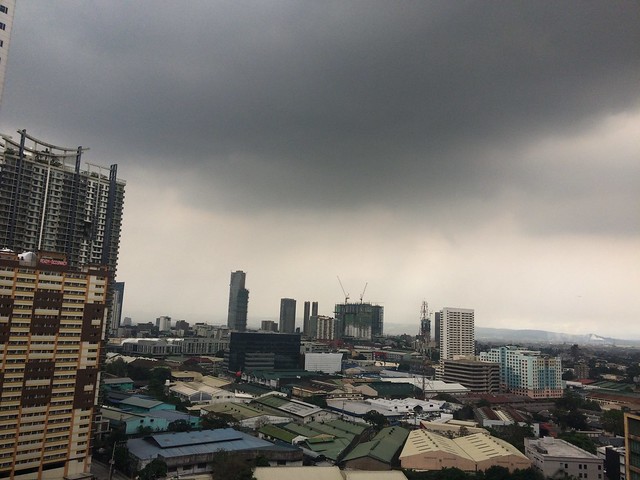
Mandaluyong, Metro Manila

Every single text in the Bible that speaks of same-sex sexual desire and same-sex sexual behaviors condemns them. In Leviticus 18:22, the condemnation extends to the use of the word abomination. Dershowitz argues that Leviticus 18:22 is “the principal prooftext” against homosexuality, and that is true for the Old Testament. In the New Testament, Paul takes the argument far beyond Leviticus. Trained as a rabbi and a teacher of the Scriptures, in Romans 1:18-32 Paul goes beyond a condemnation of males having sex with males. He also condemns women who have sex with women, exchanging “natural relations for those that are contrary to nature,” even as in male homosexuality the natural use of the woman is exchanged for “shameless acts with men.” Paul also makes clear that same-sex passion and desire is also sinful, contrary to both nature and divine command. For Christians, the most significant realization is that the crucial moral teachings of the Old Testament Holiness Code that are binding upon us are repeated, and often amplified, in the New Testament. Christians may eat shrimp without sin, for example, but are fully bound by laws against any sexual activity outside of marriage, the covenant union of one man and one woman.
There is no real question about what the Bible teaches about human sexuality and gender. There is also no question about the influence of the Bible on Western civilization. Even now, the Bible exerts a powerful hold on the modern conscience, even when it is not acknowledged. That is extremely frustrating to the moral revolutionaries.
PORTLAND, OR—A coalition of progressive Bible scholars convened in Portland this week and agreed to add a new fruit of the Spirit to the biblical list in Galatians 5: “wokeness.”
According to the resolution, being “woke” is an essential part of being a Christian, and anyone who’s not on board with the social agenda and policies of the Left is not exhibiting the proper fruit of the Spirit in their lives.
“Be on your guard, for fellow left-leaning social justice advocates prowl about like a roaring lion, looking for someone to call out for not being woke enough,” Patterson cautioned. “If you make one wrong move, we will eat you alive.”





I used to think that work was a necessary evil—something that I had to do, instead of something that I got to do. I thought that there wouldn’t have been any need to labor and toil, if it hadn't been for humanity’s fall into sin. I imagined that if one were wealthy, then he wouldn’t have to work. Imagine my surprise as I sat under Bible teaching that pointed to work even before sin had entered into the world.
A couple of observations from the Creation narrative in Genesis 1-3 can help us think more clearly about work.
Several years ago, I was given as a gift a remote session with a bibliotherapist at the London headquarters of the School of Life, which offers innovative courses to help people deal with the daily emotional challenges of existence. I have to admit that at first I didn’t really like the idea of being given a reading “prescription.” I’ve generally preferred to mimic Virginia Woolf’s passionate commitment to serendipity in my personal reading discoveries, delighting not only in the books themselves but in the randomly meaningful nature of how I came upon them (on the bus after a breakup, in a backpackers’ hostel in Damascus, or in the dark library stacks at graduate school, while browsing instead of studying). I’ve long been wary of the peculiar evangelism of certain readers: You must read this, they say, thrusting a book into your hands with a beatific gleam in their eyes, with no allowance for the fact that books mean different things to people—or different things to the same person—at various points in our lives. I loved John Updike’s stories about the Maples in my twenties, for example, and hate them in my thirties, and I’m not even exactly sure why.
But the session was a gift, and I found myself unexpectedly enjoying the initial questionnaire about my reading habits that the bibliotherapist, Ella Berthoud, sent me.







...Christians should not fear death. They should long “to depart and be with Christ, for that is very much better” (Philippians 1:23). That does not mean, of course, that they are to be foolishly reckless or careless with their lives; their bodies belong to God (1 Corinthians 6:19–20). But an obsessive concern for one’s physical well-being or a morbid fear of death is inconsistent with a Christian perspective. Believers should long for heaven like a prisoner longs for freedom, like a sick man longs for health, like a hungry man longs for food, like a thirsty man longs for a drink, like a poor man longs for a payday, and like a soldier longs for peace. Hope and courage in facing death is the last opportunity for Christians to exhibit their faith in God, to prove their hope of heaven is genuine, and to adorn their confidence in the promises of God.

I also learned about his childhood. Although he had shared stories about playing stickball in Queens, he never went into much detail about the different ways he and his neighborhood friends entertained themselves. Perhaps, like me, you'll see these scenes play out in black and white, like something from a classic film. And perhaps, like me, you'll find his tributes to departed friends especially powerful. In those, my father conveys what he admired in other people and what he most appreciated in personal relationships. His sorrow at the death of one friend particularly moved me, as my father expresses regret at "not...say[ing] goodbye. But I have the sure hope that I will see him again where old friends will have an eternity to catch up and make amends." These words mirror my own feelings after the death of the man who wrote them.

When we analyze grieving people, we add to their burden. Everyone processes loss differently, whether they are grieving the loss of a loved one, loss of health, lost relationships, or even lost dreams. Offering suggestions can feel like judgment, and careless words can cut deeply. We can become like Job’s comforters, who went on and on, speaking about things they neither knew nor understood.
It’s easy to discourage a struggling friend. Trust me, I know. But I’m challenging you, me, all of us, to put down our expectations of our suffering friends. Let’s stop trying to “fix” them. Don’t bludgeon them with theology. Trust that God is working in them, and be patient while they process.
Instead, let’s sit with our friends. Cry with them. Support them as they grieve. They need grace to heal. Remember, we don’t need to be a savior for our grieving friends. They already have One — and so do we.
Are You good only when I prosper
And true only when I’m filled?
Are You King only when I’m carefree
And God only when I’m well?
You are good when I’m poor and needy
You are true when I’m parched and dry
You still reign in the deepest valley
You’re still God in the darkest night


As a frequent traveler—she has been to 30 countries, including medical missions to Tanzania and Rwanda—Zang wanted to be better prepared when the next in-flight medical emergency crops up. She researched domestic and international laws and learned what those airline medical kits are supposed to contain and what they lack.
In fact, Zang amassed so much material that she shared it with her colleagues during a grand rounds on in-flight medicine.
“Lots of people were interested,” she says. “[I]t’s something everyone’s a little uncomfortable with … so they want to know as much information as they can about it.”
The airplane causes a lot of unique changes in the body that we're not really aware of. Being on a flight is the equivalent to being at 6000 to 8000 feet of altitude. At sea level, oxygen saturation in all of us healthy people is 99% to 100%, but when we go up into the air, most of us would be about 92% to 95%. So you can see how anyone who had underlying respiratory or cardiac issues, if their oxygen saturation drops lower, it's going to exacerbate angina or make their COPD [chronic obstructive pulmonary disease] or asthma worse. In turn, the very low humidity in the airplane has been shown to exacerbate asthma and COPD because of the increased dehydration and the increased mucosal dryness.
