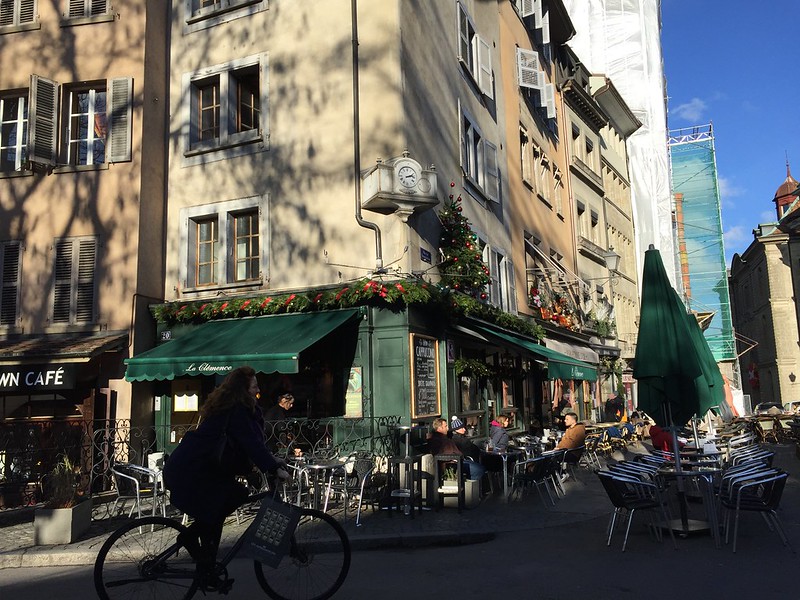
Med school diaries
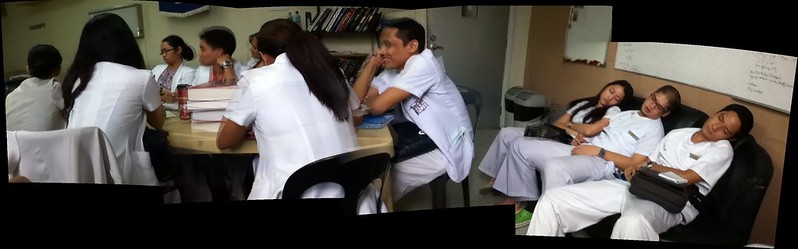
Thrilled to know we have new doctors! Congratulations! I remember taking the road to that almost elusive medical diploma, a process that involved micro-naps to get us through the day.

Met with Ronald and Althea yesterday. Ronald is a kind and brilliant internist who's deployed here for the meantime. We last met during Katrina's idyllic wedding, where he and John Mark left me at the reception area, leaving me no choice but to join in the games to represent the "friends of the bride." Well, anything for Kat.
Thea is a nurse of the highest order; she is also a college professor, mother of two, and is working on her PhD. Her husband and I might be related. I hadn't seen her for 16 years. She messaged if I had free time for coffee. I had just woken up from a postprandial nap. A few minutes later, her car was in front of the gate. I was surprised that she remembered where I live. She said her kids went to daycare at St. Gabriel, in the next block. The kids would go around the neighborhood during mini-parades. I was surprised that there was a daycare center.
We remembered Ronald, who I'd been meaning to meet. We used to ride the same sundô—the Tamaraw FX—on our way to school. Ronald arrived a few hours later; he had to take care of some matters in the hospital.
It was such a joy to finally meet them. There's nothing quite like friends from way back to keep one grounded. I'm inspired and encouraged by their outlook and priorities. One thing we learned: spontaneous meet ups are more likely to push through. We might be cooking up the next meet up.

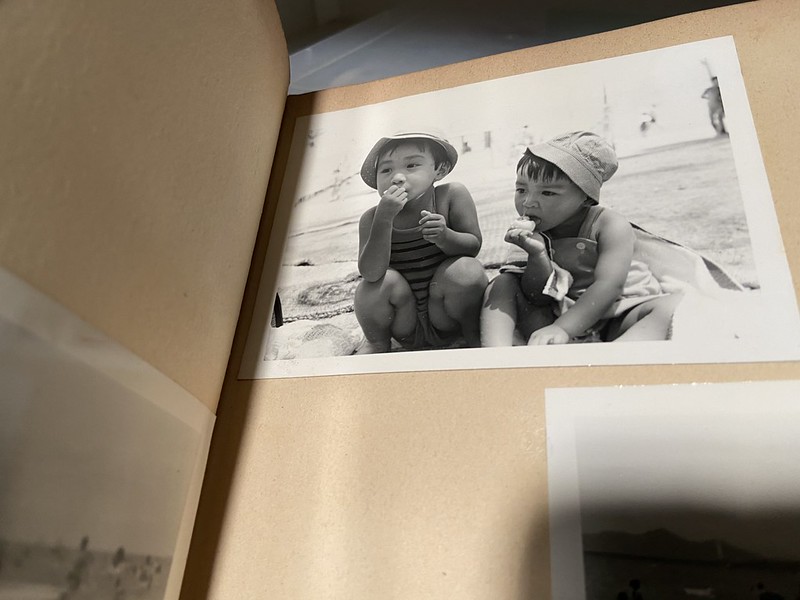
The devil is endlessly ingenious, and sex is his favorite subject,” Tolkien insisted. “He is as good every bit at catching you through generous romantic or tender motives, as through baser or more animal ones.” Thus, Tolkien advised his young son, then 21, that the sexual fantasies of the 20th century were demonic lies, intended to ensnare human beings. Sex was a trap, Tolkien warned, because human beings are capable of almost infinite rationalization in terms of sexual motives. Romantic love is not sufficient as a justification for sex, Tolkien understood.Fascinated by handwritten letters, I looked up JRR Tolkien's handwriting. He must have used a stub nib in this letter, sold for auction at 8000 dollars. I read in a forum that the English professor used dip pen and ball points.




The Bible tells us to pray for our leaders—and we should—but all of that is a means to an end, and that end is “that we may lead a peaceful and quiet life, godly and dignified in every way” (1 Tim. 2:2). The goal is not that the arena of the state would be ground-zero for meaning in our lives—much less for excitement and interest. When the civic order is going well, we should pay attention to it out of duty—not out of constant existential crisis. Those are not always the times we have, but those are the sorts of times for which we should pray. The point is not that we should hope for a boring decade so that we can be bored. The point is that we should pray for a boring decade so that we can be rekindled with interest and affection and passion for the things that ought to fuel such things—the kingdom of God, the gospel of grace, the love of family and friends and community, the glory of the ordinary, which is where, after all, the best of real life happens. We have all seen that this year. It’s hard to find the joy we need to find in being the church, in being families, when we have to constantly wonder whether a vaccine will be ready in time, whether the next telephone call is that an elderly relative is now in the hospital.
Moore to the Point is one of my favorite newsletters, like blog posts delivered to my email each week.
In all the years I’ve been writing I have never had to type words more difficult, more devastating than these: Yesterday the Lord called my son to himself—my dear son, my sweet son, my kind son, my godly son, my only son.The responses on Twitter are sources of encouragement.

Wardens have limited access to the mainland during the winter months, aren’t guaranteed fresh running water, and often live under the threat of harsh storms and perilous currents that can leave them marooned for weeks at a time. Food is delivered once a month by boat. It’s not a role that many are suited for. And yet a growing number of people are dreaming of this simple way of life, seeking to trade the madness of our busy cities for a self-sufficient life among nature.This excellent article (with beautiful photographs by Alex Ingram) reminds me of Larissa MacFurquhar's piece on the British Falklands:
It is a place to retreat to in a time of plague. Outside the town are miles and miles of empty land, and few roads. Nothing anywhere but whitegrass, dark, scrubby bushes growing close to the ground, and rocks. Only low mountains and no trees, so there’s little to block the incessant wind that blows in from the sea. It’s very quiet, at least when the wind dies down, and some people find the silence and the emptiness hard to take. Before the war, in 1982, some of the bigger farms employed dozens of men, and there were settlements with forty or fifty people living in them, but most of those people are gone now, either moved or emigrated. These days, there is one person for every twelve square miles. Some of the old houses are vacant and derelict; others were hauled out of the settlements, leaving not so much as a gravel track behind, because the people who lived there rode horses.
At the edges of the two big islands, East Falkland and West Falkland, are more than seven hundred smaller islands, some empty, others inhabited by only one or two families: a couple of houses, some generators, a landing strip. There is plumbing and Internet. With a big enough freezer, you could stay here without contact for months.


A few weeks after my wife Karina died in May last year, some friends of ours who had previously conveyed their sympathies, messaged me to ask how I was doing. Though at first I found this expression of concern a little odd, I soon understood what it was about.He has developed new habits.
I have found myself building new habits because many of the old ones required Karina’s presence. I began to sleep on her side of the bed, and eat my meals while seated on her chair. I began to wear the Apple watch I gave her as a birthday present, because I could not bear seeing it unused on our bedside table. I now listen to less music and more poetry on Spotify, because my taste in music is basically a copy of hers. Every night, I light a candle before one of her last photos, and think of her and the life we shared. But, anniversaries and special occasions are tough. My children and I continue to celebrate them as though she was still there.This is where he is.
I worry about being so overcome by grief that I must persuade myself that life still holds some meaning and purpose. That is where I am. But I also worry about getting so adjusted to a life without Karina that I may no longer feel her lingering presence. Then I will have completely lost her.