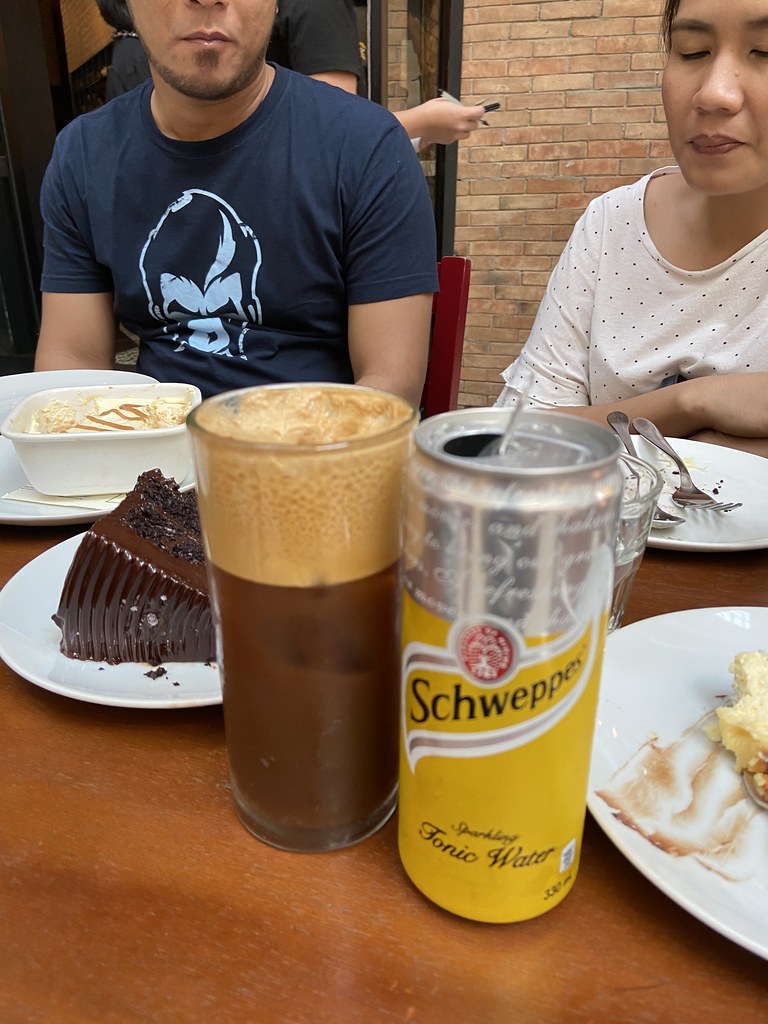
Southeast Asian cuisine is my top favorite

Bangkok, Thailand


Thus the world, like a jaded coquette, spurns our attempts to give ourselves to her wholly.
Tim Ferriss: Are there any other rules or practices that you also hold sacred or important for your writing process?
Neil Gaiman: Some of them are just things for me. For example, most of the time, not always, I will do my first draft in fountain pen, because I actually enjoy the process of writing with a fountain pen. I like the feeling of fountain pen. I like uncapping it. I like the weight of it in my hand. I like that thing, so I’ll have a notebook, I’ll have a fountain pen, and I’ll write. If I’m doing anything long, if I’m working on a novel, for example, I will always have two fountain pens on the go, at least, with two different colored inks, at least, because that way I can see at a glance, how much work I did that day. I can just look down and go, “Look at that! Five pages in brown. How about that? Half a page in black. That was not a good day. Nine pages in blue, cool, what a great day.”
You can just get a sense of are you working, are you making forward progress? What’s actually happening. I also love that because it emphasizes for me that nobody is ever meant to read your first draft. Your first draft can go way off the rails, your first draft can absolutely go up in flames, it can — you can change the age, gender, number of a character, you can bring somebody dead back to life. Nobody ever needs to know anything that happens in your first draft. It is you telling the story to yourself.
Then, I’ll sit down and type. I’ll put it onto a computer, and as far as I’m concerned, the second draft is where I try and make it look like I knew what I was doing all along.
At eighty-six, Mavis remains an elegant woman. Each day she was impeccably dressed in a woollen skirt, sweater, scarf, stockings and square-heeled pumps. A medium-length coat of black wool protected her from the Paris chill and beautiful rings, an opal one among them, adorned her fingers. Her accent, soft but proper in the English manner, evoked, to my ear, the graceful and sophisticated speech of 1940s cinema. Her laughter, less formal, erupts frequently as a hearty expulsion of breath. French, the language that has surrounded her for over half a lifetime, occasionally adorns and accompanies her English. She is a spirited and agile interlocuter who tells stories as she writes them: bristling with drama, thick with dialogue, vividly rendered and studded with astringent aperçus.
[May] accepted the rule of her grandmother as she accepted a rain squall of a stomach ache, with a tough, basic certainty that such things would pass.

"We go to the cemetery," May said flatly. They did, too. She and Eunie went and sat in the cemetery almost every afternoon because there was a shady corner there and no younger children bothered them and they could talk speculatively without any danger of being overheard.