Airport

In transit - Japan skies
While waiting for my flight to Mindanao on a Saturday afternoon, I pick a seat near Gate 2 and eat what will go down as the best meal of the day—even better than Shangri-La’s eat-all-you-can breakfast buffet or the wagyu steak supper I will have later that night. It is 12:20 pm. I devour the Hen-Lin pork-with-shrimp siomai and asado-bola-bola siopao, my back hunched as I carefully arrange the food on my lap, careful not to spill any sauce on my pants. There are no decent restaurants at Terminal 2. Renovations are on going, leaving passengers to decide where to eat and drink—or whether to do those at all.

I resume reading Mark Vanhoenacker’s Imagine a City: A Pilot's Journey Across the Urban World. The writer takes me to Sapporo, in a chapter entitled City of Snow. His prose easily transports me to Hokkaido, where I, a man from the tropics, enjoyed the otherworldly sensation of being frozen early this year. As I savor the rare moment of quiet in the airport, the man seated near me stops scrolling his phone and asks me what I’m reading.

I respond in Cebuano after detecting his accent. 

Bisaya diay ka, he says, smiling. He says reading makes him sleepy.

I talk about the chapter I’m in, and about reading in general—that it gets easier the more you do it.

Ang akoang anak mahilig pud mag-basa-basa.

He says he’s flying to Bohol to visit his family. He talks about his family, especially about a son in Southern Leyte. He asks me what I did in Manila.

I had a meeting, I say.

Overnight ra ka?

Oo.

Unsa man trabaho nimo, Sir?

I tell him I’m a doctor.

He says his son wants to be a doctor, too. Dugay mahuman ang pag-eskuwela, Dok? 

It’s quite a long time, I say, citing the usual stats: 4 to 5 years of undergraduate degree, another 5 years of medical school, and many more after that, depending on one’s career path.

Ang akoang anak, gusto niya mag-surgeon sa utak. Nganong utak man jud ang gusto niya?

Ah, neurosurgery. Challenging na, pero exciting. I-encourage lang nimo, kung ana gyud ang gusto niya.

He says his son is set to graduate as top of his class. He is hard up financially but wants to support his son’s dreams. He says, Paningkamutan lang namo.

Daghan na scholarship karon uy! Mag-apply ra siya. Naa na’y mga state universities nga di kaayo mahal ang tuition.

Lagi ba, Dok?

Soon we hear the announcement: the flight is on time, boarding has commenced.

Mauna na ko. Congrats sa imong future doktor, I say to him as I shake his hand.

As I slowly inch my way to the back of the plane, I realize I did not even ask for his name. But he is a good father blessed with a good son, and there are probably many more like him—parents praying for a better life for their children.

After take off, I open the book and, lulled by the rhythmic turbulence, eventually sleep. 

Rest

men fishing  

There are fleeting moments, as in the past days, when the desire to rest and refrain from work gets overwhelmingly powerful. Stepping out of the house brings about a weariness—fatigue and sadness combined. Those moments don’t last long, usually a few minutes upon waking up, before daylight, but they do make me wonder about the reasons why I do what I do. 

Perhaps because it has been raining in this part of the world, usually in the afternoons—a welcome respite from the equatorial heat of lunchtime. I love rains. They make me think deeply. I enjoy the rain when I’m at home, looking out the window, listening to the white noise of water crashing on the roof, observing the soil and grass getting wet, the flowers and leaves dancing as they receive the drops from the skies.

Perhaps because we’re nearing the end of the year. We’re closer to December than January, a fact that surprises me even as I write this. Time moves quickly as a whole, yet the acceleration of time remains  unobserved despite the hour-by-hour schedules I sometimes have to keep up with. The cares of this world, if I’m not careful, can drown the rhythms of the moment: weeks feel like days, or the reverse. I know my to-do list for the day, but I often forget what date it is, unless I check my phone. 

But the body keeps the score. And I must rest. 

Active rest is hard. I must have heard it from the late Tim Keller, whose voice I still listen to most times of the week on way to work, that rest involves idleness (doing nothing), meditation (studying Scripture and praying), and avocation (doing something else other than work, like a hobby unrelated to one’s primary job). I schedule moments of rest because I realize I’m not a machine. When I feel rested, I become more effective in my work. These rest periods may look like a 20-minute nap at home before I start my clinic, or an extended period of travel, like a week spent with friends and their families, or a weekend with my brothers, who now each live in Europe and Australia, or a quick drive to the farm with my mother.

But rest—the real, abiding, refreshing rest—is primarily spiritual. I love what the Redeemer City to City says about the topic:

True rest can only be found in Jesus Christ. We must stop looking to occupation as our main source of identity and fulfillment. Our true identity is a beloved child of God. Salvation is not based on our achievement, but on Jesus’ finished work on the cross. As Tim Keller writes, “the ultimate source of the tranquility we seek is Jesus Christ, who—because he has toiled for us on the cross—can offer us the true rest for our souls (Matt. 11:28–30).”

When we turn away from idolizing our career and look to Jesus, we regain a proper perspective on vocation and rest. Similar to work, rest was part of God’s original design for creation. God took a break (Gen 2:2-3). Likewise, God commanded His people to observe the Sabbath, a day when no one was to labour (Exodus 20:8-11).

Some people apply this passage by taking a day off each week. However, practising Sabbath is much more than a vacation. In reality, we cannot experience a Sabbath day if we do not have a Sabbath heart. In The Rest of God, Mark Buchanan writes: “A Sabbath heart is restful even in the midst of unrest and upheaval. It is attentive to the presence of God and others even in the welter of much coming and going, rising and falling. It is still and knows God even when mountains fall into the sea. You will never enter the Sabbath day without a Sabbath heart.”

It’s amazing to me that Jesus offers a welcome embrace for the world-weary and overworked among us: “Take my yoke upon you, and learn from me, for I am gentle and lowly in heart, and you will find rest for your souls” (Matthew 11:29).

Neneng

I'm coming back. I left my phone charging by the main door, read the Neneng's text message, timestamped at Wednesday, 9 pm. 

I don't read it until early morning the next day. My phone is in perpetual sleep mode when I'm at home, but I do check it in regular intervals for urgent messages, which I don't, in my profession, get a lot of. 

She came back to the house that night, but we were all asleep, the gate locked. From the street, you can see a dim illumination from the wide front glass window, giving our home the aura of an old library: quiet and peaceful, shielded from the worries of the outside world. It probably didn't help that Paul, who forgets his job description as canine guardian at night, couldn't be bothered to bark, despite Neneng's plea. Paul is so adorable but it gets in your nerves when he ignores you intentionally. 

I must remember to remind Neneng to get us a new doorbell soon.

Neneng, whose real name is Generose, clocks in at 7 am to cook us breakfast, does household chores and groceries, and leaves in the afternoon, after she finishes cooking dinner. In our town, we call that the "stay out" arrangement: she reports for work at day time and comes home to her family at night. There are moments, such as a few days ago (because of a medical urgency involving Nanay), when we'd ask her to spend the night on occasions when we'd away. For house-sitting. There's not a lot of work to be done at home, but Neneng works incessantly, fixing and cleaning and wiping corners we often forget about. 

Get some rest, Neng! Turn on the aircon in Manong's room and take a nap. You're not getting any younger, you know?

But she won't hear of it. Sige lang bala. Daw magkasakit ako kung wala gina-obra.

This morning, on her day off, she knocks on the gate to retrieve her phone. I don't see her phone near the main door. 

Try ko nga i-miss kol.

The phone, it turns out, is inside Nanay's room. Last night, Nanay must have moved it from the living room to her bed room to keep it safe. 

As I hand the phone over to her, she tells me, Nakapasa na si Jezelle ba. Jezelle, her daughter who just took the board exam for medical technology; Jezelle, who borrows some of my books (Elena Ferrante's My Brilliant Friend, for instance) and returns them neat, with covers wrapped in plastic with loving care.

Nanay gets up and basks in the great news. Neneng says her husband Uncle Toto teared up with joy, and she did, too, and so did the entire family, who had been praying for Jezelle's success.  


Neneng and Nanic

Freddie and phones

Untitled
Untitled


I like my devices old, cracked, and bruised. I find these imperfections charming, like of badges of honor: an old phone has lived up to its task, and it has done well. Also: old devices don't attract attention. I can leave them on the table, untouched by any competent thief who has appraised their value—close to nothing.

I've had no real desire to get a new phone, until Manong asked me if I had a phone to spare. He plans to use the phone in Sweden where he will live and study for the next few years. I figured I could easily get a new phone with my postpaid plan, and I'd hand over my old phone to him. 

I got myself a new phone today—an iPhone 16, the basic variant—to replace my trusted five-year old iPhone 11. I've long since lost count of the iPhone variants in the market, but I remember starting with an iPhone 5, then 6, and transitioned from a prepaid TU-200 promo by Sun Cellular (the "in" thing at the Philippine General Hospital during my years of training) to a postpaid plan. 

My visit at the mall was unceremonious, like getting my driver's license renewed. I had to do it out of duty. I picked the phone that was the most available and that would fit best in my pocket. I left the store with the new phone in my bag, without buying so much as a case and a screen protector. The walk from the mall to the parking area felt strange; the silence was palpable. 

Then I remembered Freddie, my dear friend and medical oncology colleague and father of my goddaughter, who insisted to pay for my screen protector and case after he accompanied me to get my unit at at Robinson's Manila. It was in December 2019. He was more excited than me. 

"Please, Lance, have mercy on your new device. Put a screen protector," he said. 

This is the same Freddie who, until now, inches towards stores that sell all sorts of phone cases, sometimes preferring the transparent plastic to the faux-leather cases with covers that can hold one's credit cards—like the ones old people use in Hong Kong. This is pretty much the same Freddie who changes phones every few months; I get alerts in Viber that he has a new number, and therefore, almost always a new device. 

I remember that, after buying my iPhone 11, we headed home, taking the train from LRT Pedro Gil Station up to MRT Boni (my stop) and MRT Shaw (his). This was the era when the trains would break down mid-trip and sweaty, harassed passengers would be forced walk along the train tracks. The video footage would then be shown in TV Patrol, when people still watched TV. 

Downtime

P8080098

One thing I’ve learned these past years in bringing friends together: planning trips on a whim, on a joyful, last-minute impulse, often gets things done.  My high school classmates and I did this when we planned a trip to Taiwan in 2024. During a christening after-party, we agreed to book cheap flights in February for a trip that would happen in September. The trip eventually materialized, except that Daphny and Vanessa had to rebook their tickets due to other work commitments. That cost them more in the end, but, at that point, they were far too committed to the out-of-town reunion and feared they’d miss out on all the fun. I look back at the trip now with fondness and joy. How far we’ve come, literally, from our Marbel hometown.  

P8080097

Planning is good. What makes it bad is doing it over-the-top. For men and women in their late thirties, a category that sounds older more than how it actually feels like (I’m of the 28-year old mindset that I get surprised when people drop the po/opo on me), over-planning leads to over-analysis. A wealth of valid excuses not to leave home exists and can be deployed successfully: children, meetings, work activities, other personal commitments. 

P8080089

And then there’s the sense of exhaustion after a long week at work, which is just as valid. I feel that by Saturday, I’ve reached my quota for human interaction. I want to enjoy the comforts of home, clean my fountain pens, play around with my typewriter, play some music, and tackle my tsundoku. I replenish my social battery in silence and solitude. 

P8080091

But there’s a time for everything and a season for every activity under heaven. Seasons of impulsive decision-making are triggered by the environment. Case in point: sitting together with like-minded friends at a birthday party last week. Lining up to get food on the buffet table, I told my classmate Katty, “I miss the beach.” She said she felt that, too—and could she bring her kids along? Perhaps the beach was merely a pretext for a kind of hunger for rekindling old friendships: I do miss my high school classmates and am curious about how they are doing. They live nearby but we hardly ever see each other.

Which brings me to another thing I’ve learned in bringing people together: adding a personal touch to invitations is more effective than impersonal chat group invitations. I had very little expectations that they’d agree to go at all: three people was the bar I’d set for the getaway. But I was surprised to hear Ryan and James and Wendy agree to come. Several people were on the fence, and others replied they could not make it, deploying the reasons I’d written about, including an elective surgery one classmate would undergo. I asked Willie to make reservations for rooms in a resort in Glan, Sarangani. Willie possesses an unlimited reserve of energies for planning these things. I have ideas; he executes them, with brilliant ideas of his own. There’s another lesson here: it’s good to have someone like Willie to put everything together. The room reservations, the food to bring, the carpooling arrangements. 

P8080073 

On a Friday after-work afternoon, I found myself alone at the resort. Not entirely: there was a family sitting quietly by the coast, waiting for their ride home.

P8080082

My classmates would arrive many hours later. They were at work, finishing last-minute tasks. I took a luxurious nap inside the two-story house. The noise of the airconditioner lulled me to REM sleep. 

P8080088

When I awoke, I looked out the balcony and saw Daphny standing by the shore.  

“Gutom na ko,” I told her, as we walked along the coast, enjoying the last rays of sunset. “Let’s find something to eat.” 

We did not bring any food, and the resort’s restaurant was closing early.  August is downtime for tourism.

Willie, Katty (with husband Dunn and kids Mark and Addie), Angeli, Ryan (with wife Kathleen), James (with wife KC), and Wendy would be bringing the meals and drinks. And many stories, which would keep us awake until midnight.


P8080167P8090292


P8080058
P8090294
P8090298

Solitary walks

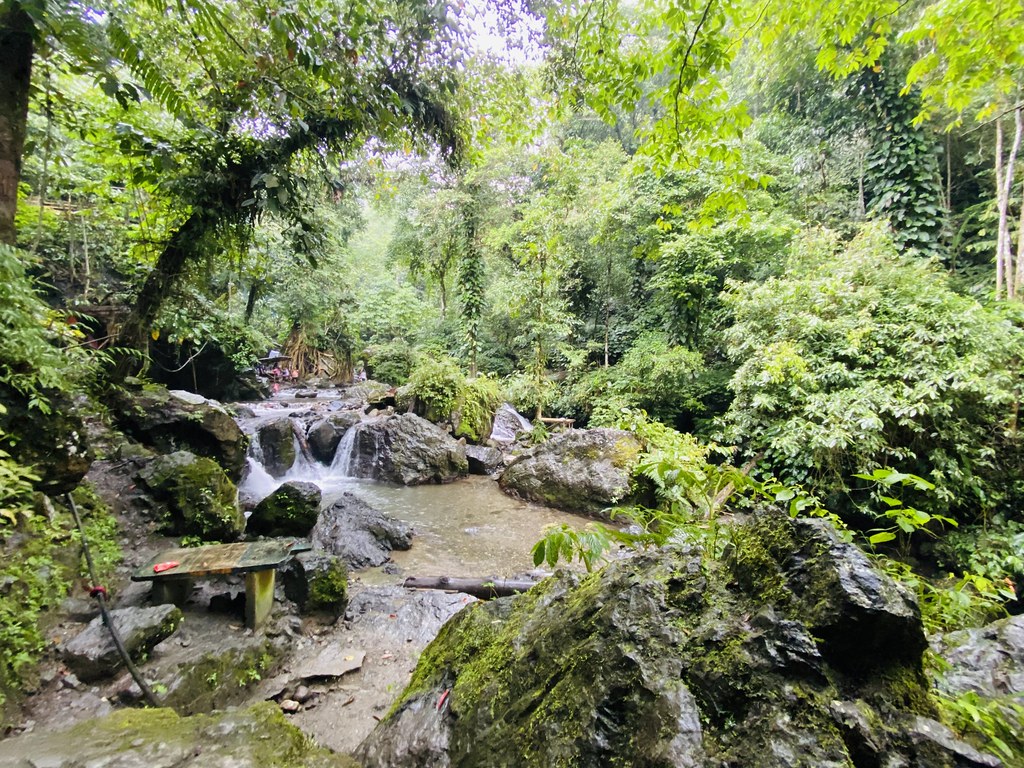
Lake Sebu with Uncle Boboy  

Craig Mod describes himself as a writer, photographer, and walker. He takes solitary walks all around the world, mostly in Japan, where he has lived for more than twenty years. His book, Things Become Other Things, is largely based on those walks, a distillation of his writing much reflected in his website. I thoroughly enjoyed his walking memoir. His prose is terrific. His wisdom and kindness radiates through the pages. He shares about a life based on a scarcity mindset and discovers, when he lands in Japan in his twenties, that people in that country exist with a mindset of abundance. The closest Japanese word for it is Yōyū. As far as I understand it, the Filipino concept of kapwa seems to approximate what it means—sharing one’s life with others; the neighbor is an extension of one’s self.


Things Become Other Things
Craig is so interesting, and I cannot recommend subscribing to his newsletter—it’s one of the best there is. I’m subscribed to Roden and Ridgeline. He writes about things that resonate with me: cameras, book printing, solitary walks, and humanity. His thoughts about living in an age of distraction are wise and generous.

He also gets me thinking about walking and biking, things I can possibly do in my hometown. Nature is just around the corner—we have mountains and lakes and seas and valleys. And, in all honesty, I haven’t explored my city completely. (A few days ago, my classmate Jeff drove me home from Daphny’s birthday party, and I was surprised that thriving neighborhoods now exist in places that used to be devoid of human dwelling. I told him, “Sigurado ka nga Marbel pa ni, Jeff?) Craig’s photography is amazing, too! He works with Leica and the iPhone; the photographs he features in his newsletters and his book are topnotch.

How strange it is that we never walk as we ought. When one’s foot touches the ground—one foot after the other—the spirit is connected to the ground, the mind is alert, the soul is comforted. But then, there’s the heat and humidity, and the clear and present danger of South Cotabato drivers who can squash you to pieces.