Olivetti Lettera 32 is coming to town
When Sheila Heiti interviewed the recluse Elena Ferrante, Ferrante wrote back: "I’ve
written a lot, but sometimes I’ve had a hard time considering what I’ve
written to be worth publishing." That’s what I’ve been doing privately.
Writing, putting words onto blank paper, each page an adventure because I
don’t exactly know where it’s going to lead. The fun is in the exercise. The
story that emerges might be different from what I had originally intended for
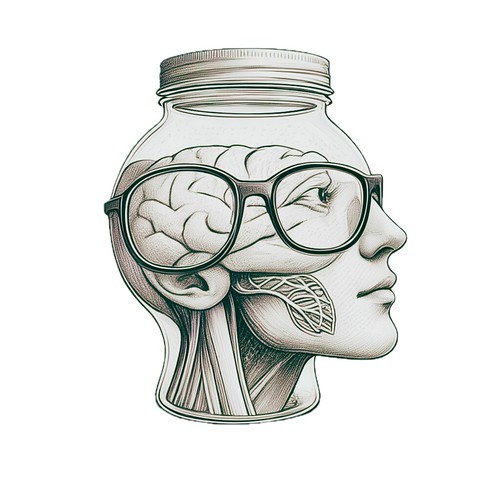
it to be. The human brain is a mysterious thing. An image, or a prompt, or a
word can initiate the desire to transform something into stories. A sudden
turn of a phrase, or the appearance of one character, can create turns in the
narrative. Using a typewriter helps. I suppose it’s the inability to do
anything else—you can’t browse anything, you can’t check your email, you can’t
surf in the internet—and the rhythmic staccato created by the pounding of the
keys that amplify the pleasure. I don’t get lost in the story. I’m finding my
way through, with a vague sense of when and how the story ends. The background
noise certainly helps.
I told my mother she should expect
a package in the mail any time this week or the next. I placed an order for an
Olivetti Lettera 32, restored and cleaned, the body bearing its original
paint. I’ve wanted to get a Lettera 32 for years now, but I couldn’t quite
justify the purchase. Why add to my small typewriter collection? How many
typewriters does one actually need? After reading The Road by Cormac McCarthy
and some of his interviews and profiles, including the fascinating article in
the Atlantic, I contacted Richard dela Cruz, the brilliant man who restores
these ancient machines from his shop in Quiapo, and right after I sent him an
inquiry, he told was just about to complete finishing touches on, guess what,
an Olivetti! I read somewhere that Uncle Cormac used that typewriter model, not the actual typewriter that's on its way to my house, for most of his stories.
There are a few points in history where form meets function so deliberately that a work of art is born in the union.
The Lettera 22 was designed by Marcello Nizzoli in 1950, and was an immediate sensation. It was awarded the Compasso d'oro prize in 1954. In 1959 the Illinois Institute of Technology chose the Lettera 22 as the best design product of the last 100 years. A specimen can be found in the Museum of Modern Art in New York City.
Marcello Nizzoli followed up the wildly successful Lettera 22 design with the Lettera 32 thirteen years later. Though things got a little more square and less organic, something beautiful happened; one of history’s iconic typewriters was born. It’s been the machine chosen by countless writers throughout the century, including some of the most iconic creators of our times; Thomas Pynchon, Bob Dylan, Leonard Cohen.
I should find a shelf to put my typewriters on display at home. These old machines fascinate the kids, including my godson Lance, who once asked me, “What is that, Ninong?” I told him how to load the paper onto the carriage, and how to adjust margins, and so on. I had never felt so old until that day. Yes, I should put the typewriters on a shelf, preferably with glass, so the dust doesn’t get through. You might see the Smith Corona, the Hermes Baby, the Erika Weinrich, the Underwood, but certainly not the stories I’ve written—no, no. They will, unlike my typewriters, never see the light of day.
Labels: typewriter


0 Comments:
Post a Comment
<< Home