Some books
No coherent reading plan exists in my head. I pick the books I want at the time I like to read them. I'm open for surprises, on the lookout for new names. Here are some books I've read. I write about them here for posterity.
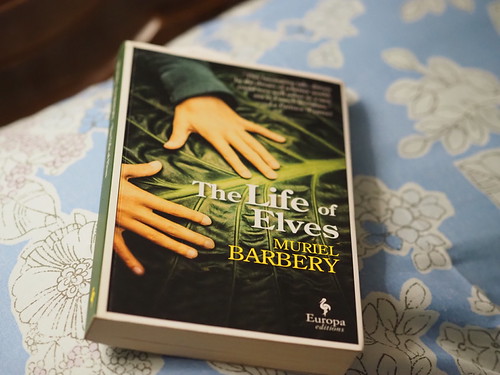
Muriel Barbery's The Life of Elves is a novel of poetic proportions. I'm not sure what I mean by "poetic" exactly, except to convey the relentless, rhythmic flow of imagery, her words pieced together to form sentences that make me say, "Oh wow, I've never thought of that before." At the center of this novel are two gifted girls—one from France, the other from Italy. Two worlds converge; the natural and supernatural meet through a bridge, a portal made possible by the lives of two girls, whose origins are mysterious and fascinating. The village faces extinction, and a war is looming. But the novel is brimming with hope, love, and community.
Colm Tóibín's The Story of the Night brings us to Argentina, where a young man, born to an Argentinian father and English mother, explores his sexuality and personhood. The prose is beautiful, the story captivating but ultimately tragic. There came a point when the story brought me to scenes that made me remember the patients I'd met at the HIV clinic during my infectious disease rotation, particularly, and one patient, especially, who was dying of complications from AIDS, his parents waiting outside, as I asked him about his medical and sexual history. That patient, emaciated and helpless, refused to tell his parents about his diagnosis, and the lifestyle that ultimately led to where he was. His parents told me, as I was getting out of the room, "We know what he has, Doc. We don't want him to know that we know." He died a few days later.


Colm Tóibín's The Story of the Night brings us to Argentina, where a young man, born to an Argentinian father and English mother, explores his sexuality and personhood. The prose is beautiful, the story captivating but ultimately tragic. There came a point when the story brought me to scenes that made me remember the patients I'd met at the HIV clinic during my infectious disease rotation, particularly, and one patient, especially, who was dying of complications from AIDS, his parents waiting outside, as I asked him about his medical and sexual history. That patient, emaciated and helpless, refused to tell his parents about his diagnosis, and the lifestyle that ultimately led to where he was. His parents told me, as I was getting out of the room, "We know what he has, Doc. We don't want him to know that we know." He died a few days later.
Jon Fosse's Septology arrived in the mail yesterday. I took the book with me to the porch where at first, the narrative overwhelmed me. The entire chapter is one, long run on sentence. I'm in the head of a man named Asle, who lives in the southwest coast of Norway. It is a book of solitude, I would say, or at least it reads that way to me; I'm on page 109 out of this 829-page novel, a compilation of books previously released as a trilogy, translated by Damion Searls. The blurb calls Septology hypnotic. My goodness, it really is.
Labels: books/reading


0 Comments:
Post a Comment
<< Home